
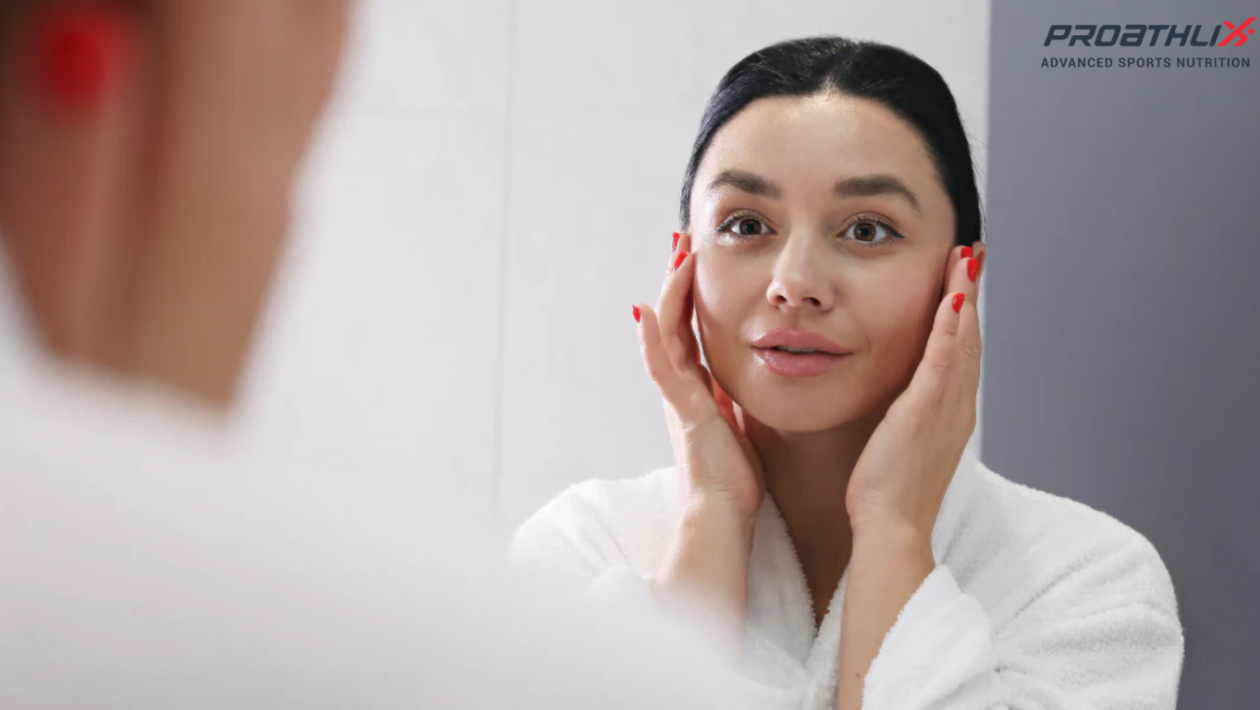
In an era when beauty and performance go hand-in-hand, Collagen Whey Protein emerges as a powerful hybrid: helping not only to build and repair muscle, but also contributing to such aesthetic purposes as radiant skin, healthy nails, and thick hair. This is how this two-protein strategy is achieving success and why, and what to keep in mind.
What Are Collagen and Whey Protein?
- The richest protein in the human body is Collagen. Found in skin, bones, cartilage, hair, nails, and connective tissue, collagen provides structure, elasticity, and strength. As time passes, natural collagen production decreases, and this results in wrinkles, sagging skin, weaker cartilage, etc. Hydrolyzed collagen (collagen peptides) is frequently found as a supplement, and the peptide is broken down into smaller amino acids to enhance absorption.
- Whey protein is a fast animal protein (typically dairy) source (it contains all the essential amino acids required to build muscle protein), but with large quantities of leucine and other branched-chain amino acids. Muscle building and recovery is a common well-known and widely used sports nutrition product. It is not explicitly mentioned in the sources as collagen whey, however, it is possible to put collagen together with whey or use whey and collagen together because of the relevance of both structural and functional protein requirements.
The Benefits for Skin, Hair, and Nails
1. Skin Elasticity, Hydration & Repair
- One of the essential components of the skin dermis is collagen; it can keep the skin elastic and firm and hydrated. With old age or under environmental stress (UV exposure, pollution, oxidative stress), the collagen fibers break down, and the production of elastin decreases. The peptide form of collagen supplementation was found to enhance elasticity and hydration of skin, lessen of fine lines and wrinkles.
- The whey protein helps in repairing the skin because it contains essential amino acids (such as lysine, methionine etc.) that the new tissue needs to get. Protein turnover is also important to the skin barrier; sufficient protein is necessary to have a robust skin barrier against irritation, dryness, and pollutants.
2. Hair Growth and Hair Quality
- Keratin is a protein that is mainly found in hair. Lack of sufficient protein building blocks may either result in weak, brittle, easily broken hair or loss of hair. The follicles need a combination of collagen (controlling the supply of the necessary amino acids used in the formation of the keratin or supporting the follicles) and whey (sustaining protein sufficiency and providing it with much-needed amino acids).
- Collagen can also be useful in the prevention of hair loss by increasing connective tissue around hair follicles and supplying such nutrients as glycine and proline, which promote follicle health.
3. Nail Strength and Growth
- Nails need protein (keratin) too. Nails can break, thin, or slow down and split unless there is sufficient dietary protein. The use of collagen supplement has been found to assist in the growth of nails and lessening their brittle nature.
- The assistance of whey is in its maintenance of total protein homeostasis; as the total protein requirement has been satisfied, extra amino acids are available to support the other auxiliary tissues such as nails, hair and the skin.
Supporting Muscle Growth + Recovery
It is also highly preferred in the fitness circles due to its high levels of vital amino acids especially leucine which plays a crucial role in initiating the synthesis of muscle proteins. Although not complete in the fullest sense of this term, i. e., containing all the essential amino acids in perfect proportions, collagen functions as a supplement to the whey, furnishing great quantities of glycine, proline, and hydroxyproline, which:
- Connective tissue repair (e.g., tendons, ligaments), which commonly is a stressed component in resistance training.
- Joint health assistance, useful in enhancing performance and decreasing injury.
- Faster healing and less pain boosting due to the assistance of mending micro-damage in muscles and connective tissue.
Thus, nutrition plus resistance training works best: whey to build muscles and collagen to give them a shape and support.
Why Combine Collagen & Whey? Synergy & Completeness
- Synergy of amino acids: Whey contains all essential amino acids; collagen contains non-essential (but conditionally essential) amino acids necessary especially in the health of the skin, cartilage and connective tissues.
- Coverage of fast and structural needs: Whey is absorbed quickly and it can be used after working out to recover the muscles. Collagen is more structural, slower and helps to provide the longer-term integrity of skin, connective tissues, etc.
- Holistic benefits: The combination of collagen supplementation with whey will be more beneficial than collagen supplementation or against whey supplementation.
How Much, When, and What Type?
- Dosage: Whey is usually taken at the dosage of 20-40 grams per serving, particularly post-workout, when building muscle. In the case of collagen peptides, most of the research involves 2.5-10 grams daily, which results in an improvement in skin elasticity, skin hydration, joint pain, etc.
- Timing: Whey protein should be taken shortly after exercise to help the muscles to build muscles. Collagen may be taken anytime but preliminary studies indicate that collagen may be co-administered with a small dose of vitamin C (enhances collagen cross-linking) or peri-workout time may be beneficial.
- Type / Quality:
- The collagen peptide is more bioavailable as hydrolysate.
- Whey isolate/ concentrate- based on dietary preferences and lactose intolerance.
- Cleanliness is important: no heavy fillers, no extra ingredients, no fake sweeteners; in the case of the skin, they may cause some form of sensitivities or breakouts.
Risks, Considerations & Potential Downsides
- Acne / Skin Reactions: In some people, whey protein has been known to worsen acne or oiliness, potentially through the action of whey on IGF-1 or insulin signaling. Watch changes, in case you have sensitive skin.
- Excess protein: This is because the Body has a limit of the amount of protein that can be utilized at any one time during repair/synthesis. Excessive intake will not automatically provide additional muscle, additional supplies of protein can be oxidized or used in other processes.
- Nutrient balance: Using supplements in excess can also result in the lack of co-nutrients (zinc, iron, B-vitamins, antioxidants) that are found in whole food and play a role in skin/hair/nails.
- Source & allergen issues: Cows produce whey, and collagen can be of animal origin (beef, fish, etc.). Verification is required by those who have allergies or dietary restrictions.
Real-World Results & What Research Says
- A number of studies have revealed that collagen peptide supplementation elevates skin elasticity, hydration and decreases fine lines.
- Certain clinical trials indicate that there are increases in nail strength and nail brittleness reduction with collagen.
- The effectiveness of whey protein in enhancing lean muscle mass has been thoroughly established, particularly when it is applied together with resistance training. Although collagen+whey joint studies are less common, the rationale of combining them implies the effect of addition or synergy.
Optimizing Your Routine
- Determine your protein requirements depending on body weight, level of activity, objectives. To build muscle + skin/hair/nails, target at least at the cost of training load, central tendency of at least 1.2 g/kg/day, up to 2.0 g/kg/day.
- Split protein consumption into portions and not a single one. This assists in a continuous synthesis of muscle proteins and in repairing tissues.
- Add collagen per day, maybe in a smoothie, shake, or even in such food as bone broth. Collagen peptides work better with the addition of vitamin C (citrus, berries).
- Choose clean sources: hydrolyzed collagen, preferably grass-fed or wild, as well as few additives. Likewise, high-quality isolates or concentrates with low sugar/artifact content should be selected in the case of whey.
- Monitor outcomes: over a few weeks to months, check for improvements in skin elasticity, hair splitting, and nail hardness. Training recovery, muscle gains, and joint comfort are also to be observed.
Conclusion
Collagen Whey Protein – as a combined nutritional supplement or individual collagen peptides + whey protein – is an effective nutritional approach to skin, hair, nails, and muscle growth, muscle recovery. Providing the wide range of amino acids, the body receives what it requires in terms of structural integrity (collagen) and functional protein construction (whey). When correctly applied, in correct dose, time, and quality of the product, it may get you radiant skin, stronger hair, nails, and muscular gains with less effort.
As the ones who consider convenient solutions, there is a range of formulations that unite these components in modernity. Such as, there is a product offered by Proathlix, such as Proathlix Protein Blend & Veg Collagen Peptide which is a mix of plant-based collagen peptides and high-quality protein blends. These choices reflect the increasing popularity of supplements, which do not only address the needs of athletes in terms of recovery, but also the well-being of the skin, hair, and nails in the long term. The incorporation of such blends into a balanced diet and training program may facilitate making nutrition decisions easier and complement the ultimate health objectives.